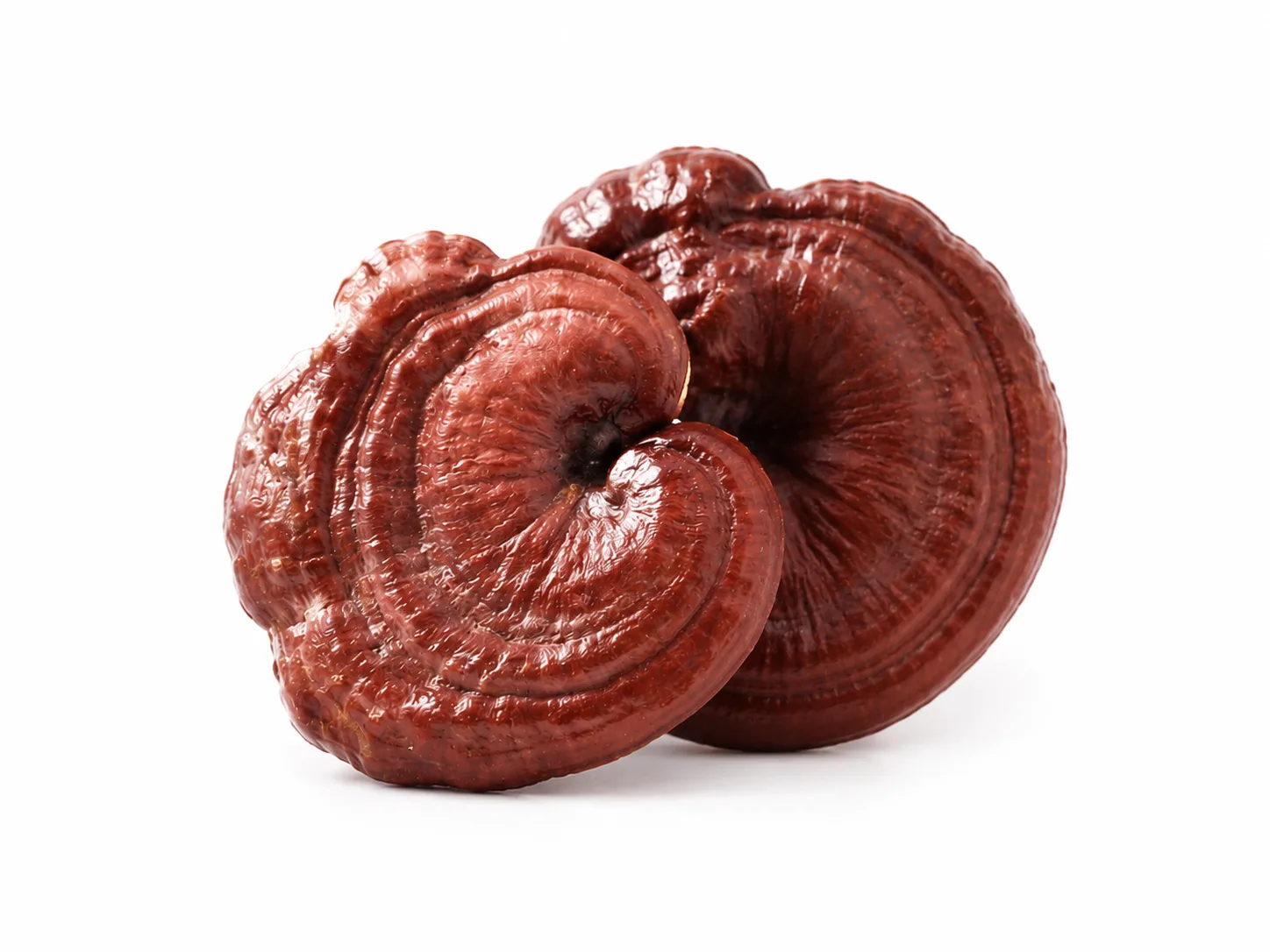
Ganoderma lucidum
Reishi Ingredients with Powder, Water Extract, Dual Extract, and Spore Options
Overview
Reishi is often presented in the market through a race for numbers. One supplier highlights higher beta-glucan content, another claims higher triterpene content, and the product story is reduced to whichever figure looks strongest on paper. In practice, however, Reishi is not one single material, and not every meaningful Reishi ingredient can be understood through one headline number alone.
At Biosan, our approach to Reishi begins with the belief that the value of this mushroom lies in the relationship between different fractions rather than in the inflation of one isolated marker. Water-soluble compounds, weakly polar fractions, non-polar compounds, fruiting body structure, and spore-based materials each belong to a different part of the Reishi story. For this reason, Biosan works with a broader Reishi logic that respects the internal balance of the species while still offering the standard commercial formats the market requires.
This page brings together Biosan’s main Reishi formats, including fruiting body powder, water extract, dual extract, and shell-broken spore powder. Rather than turning the website into a public specification sheet, the goal is to help buyers understand how these formats differ, why they exist, and which type of Reishi material may be more appropriate for different technical and commercial needs.
Available Product Forms
Additional standardised formats and detailed technical versions are available on request.
Note: Full specifications, ratios, and SKU codes are not published online. Use Request Documents for TDS, SDS, and COA samples.
Raw Material Background
Reishi, known in Chinese as Lingzhi, has been respected for centuries in East Asia, but modern ingredient quality depends less on mythology than on raw material discipline. Commercial Reishi today is cultivated rather than wild, yet cultivation itself does not guarantee a meaningful ingredient. The strain, substrate, growing cycle, harvest timing, and post-harvest handling all influence whether the fruiting body develops the secondary metabolites needed for serious extraction work.
Biosan works with cooperating growers rather than treating cultivation as a simple commodity purchase. The focus is not on producing the highest possible volume in the shortest time, but on using selected strains, defined substrate logic, and controlled growing practices to build a better Reishi raw material from the start. In practical terms, this means preparing fruiting bodies that already contain a stronger secondary metabolite profile before they ever enter extraction.
Processing Pathways
Reishi can move through several processing pathways. Fruiting body powder preserves the structure of the mushroom and is useful when buyers want the direct material rather than a highly soluble extract. Concentrated water extract emphasises soluble polysaccharide-rich fractions and is often preferred where dispersion and processing practicality matter. Dual extract exists because Reishi contains both water-soluble and alcohol-soluble groups of compounds, so a broader finished profile requires more than one extraction route.
Where a fuller-spectrum product concept is required, Biosan can also discuss practical combinations of fruiting body, extract, and spore-derived formats. The point is not to force every buyer into one “best” format, but to explain how the format should match the technical purpose.
Traditional Use
In traditional Chinese medicine, Reishi (Lingzhi) has long been associated with steadiness, nourishment, and long-term support rather than short-term stimulation. Classical texts traditionally relate it to the Heart, Lung, and Liver systems, and it is often described in the language of composure, resilience, and support for overall balance.
Scientific / Research Context
Modern research on Reishi has focused largely on polysaccharides, beta-glucans, triterpenes, ganoderic acids, and broader questions of immune modulation, oxidative balance, and inflammation-related pathways. Reishi remains one of the most studied medicinal mushrooms, but the relevance of any result still depends heavily on raw material quality, extraction route, and method of analysis.
Quality & Documentation
Detailed specifications, TDS, SDS, COA samples, and certificate-related documents for Biosan’s Reishi formats are available on request. Where relevant, Biosan can also explain how fruiting body powder, water extract, dual extract, and spore-related forms differ in process logic, solubility, and technical use.
FAQ
What Reishi forms does Biosan offer?
Biosan offers Reishi in fruiting body powder, concentrated water extract, dual extract, and shell-broken spore powder formats, with additional standardised versions available on request.
Does the website show full Reishi specifications?
No. The public page is designed to explain format structure and product logic. Detailed specifications and supporting documents are available on request.
Why are there different Reishi formats?
Because powder, water extract, dual extract, and spore-related materials are not interchangeable. Each format reflects a different processing route and a different technical purpose.
Is Reishi always a dual extract?
No. Some projects require fruiting body powder or water extract, especially where dispersion or formulation logic matters. Dual extract is used when a broader process profile is needed.
Can Biosan provide technical documents for Reishi?
Yes. Relevant specifications and supporting documents can be provided through the document request process.
Related Resources
Need Specifications, Documents, or Product Guidance?
If you are evaluating mushroom ingredient options for your market, product line, or formulation work, our team can help you review available formats and provide the relevant technical documents on request.