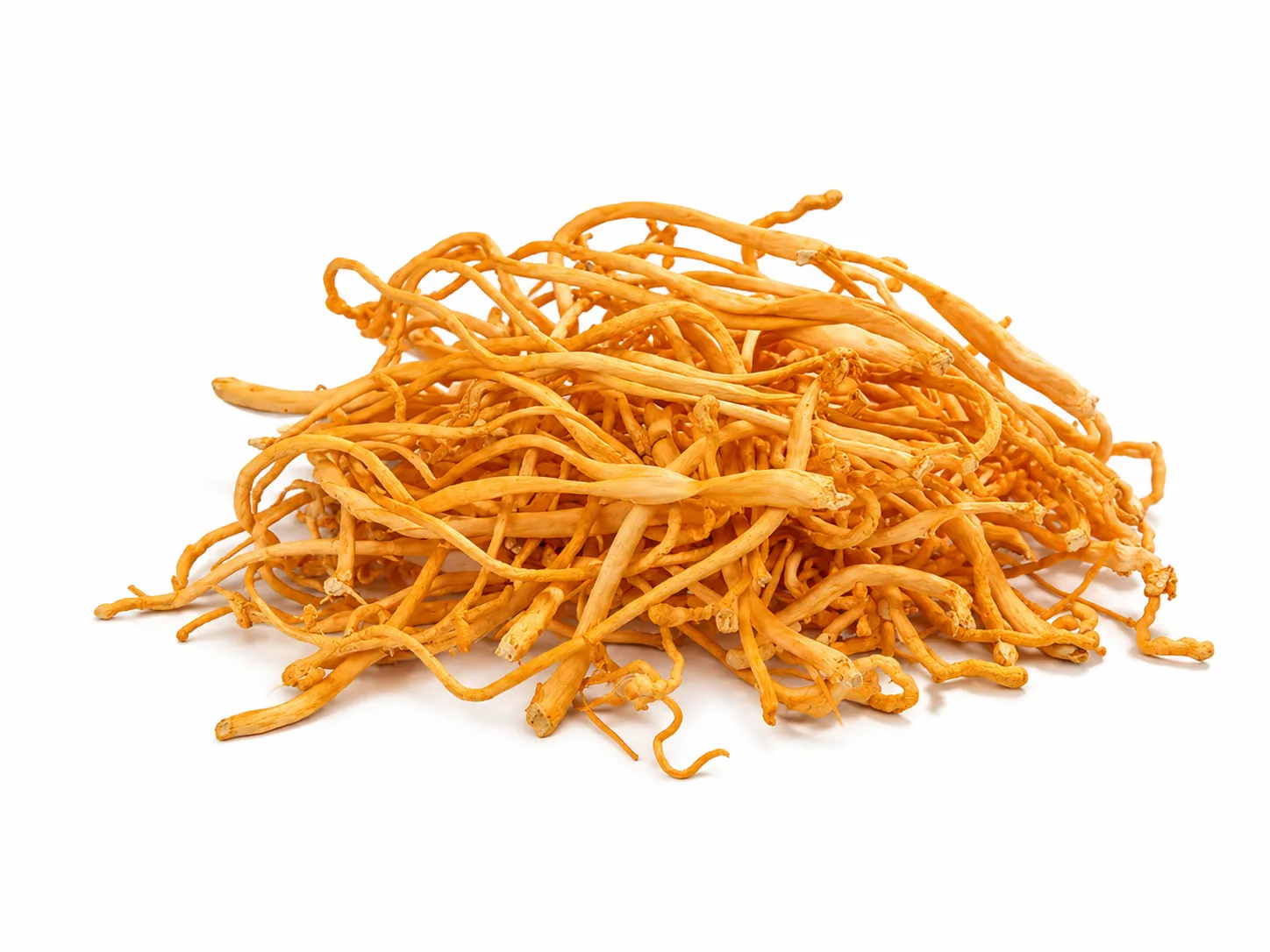
Cordyceps militaris
Cordyceps militaris Ingredients in Powder, Extract, and Dual Extract Formats
Overview
The commercial Cordyceps market is often blurred by one name being used for very different materials. Wild Cordyceps, cultivated Cordyceps militaris, fermentation-derived mycelium materials, and related species are frequently discussed as if they belong to one simple category. In practice, they do not.
For Biosan, Cordyceps militaris should be understood first as a cultivated fruiting body ingredient with its own raw material logic and process requirements. It is not a vague substitute for wild Cordyceps, and it should not be interpreted as the same thing as every mycelium-based Cordyceps product. Heat-sensitive compounds such as cordycepin make process discipline especially important, which is why low-temperature handling becomes part of the ingredient story rather than just a factory detail.
This page presents Biosan’s Cordyceps militaris formats in powder, extract forms, while making clear that species, process route, and raw material type all matter. The goal is not to collapse everything into one Cordyceps slogan, but to help buyers understand what they are actually looking at.
Available Product Forms
Additional standardised formats and detailed technical versions are available on request.
Note: Full specifications, ratios, and SKU codes are not published online. Use Request Documents for TDS, SDS, and COA samples.
Raw Material Background
Wild Cordyceps gained historical prestige because of rarity, but modern ingredient supply depends on cultivated alternatives. Cordyceps militaris has become one of the most important commercial Cordyceps species because it can be cultivated reliably and can provide a practical manufacturing base for ingredient production.
For Biosan, the key point is not only that Cordyceps militaris is cultivated, but that cultivation and harvest logic must support downstream extraction. Controlled fruiting, harvest timing, clean post-harvest handling, and the initial level of cordycepin all affect whether the raw material is suitable for producing an extract that retains meaningful levels of cordycepin and related compounds.
Processing Pathways
Cordyceps militaris can be offered as powder, concentrated extract, but not every process route serves the same technical purpose. Powder preserves the whole fruiting body structure. Concentrated extract is useful when buyers need a more processed material.
For certain Cordyceps militaris formats, Biosan also uses low-temperature extraction and low-temperature drying pathways in order to better protect heat-sensitive compounds such as cordycepin. The processing route is not an abstract technical detail. It directly affects the kind of ingredient the customer actually receives.
Traditional Use
In traditional Chinese medicine, Cordyceps is associated with the Lung and Kidney systems and has long been discussed in relation to endurance, replenishment, and long-term recovery.
Scientific / Research Context
Modern research on Cordyceps-related materials has focused on beta-glucans, cordycepin, adenosine, mannitol, energy metabolism, inflammation-related pathways, and broader questions of immune and metabolic balance. Interpretation depends strongly on species, processing method, and whether the material is fruiting body, mycelium, or a combined commercial format.
Quality & Documentation
Technical documents for Cordyceps militaris formats are available on request. Where relevant, Biosan can also clarify low-temperature processed versions and discuss the practical difference between powder, extract, and dual extract options.
FAQ
What forms of Cordyceps does Biosan offer?
Biosan offers Cordyceps militaris in powder, concentrated extract formats, with additional standardised and low-temperature processed versions available on request.
Is this page about wild Cordyceps?
No. This page focuses on cultivated commercial ingredient formats rather than on wild Cordyceps as a rare raw material.
Why is Cordyceps offered in different formats?
Different formats reflect different technical goals, processing routes, and target compositions.
Does the website show full Cordyceps specifications?
No. Full technical specifications and supporting documents are handled through direct request.
Can Biosan provide guidance on Cordyceps format selection?
Yes. The team can help explain the practical differences between available Cordyceps militaris formats.
Related Resources
Need Specifications, Documents, or Product Guidance?
If you are evaluating mushroom ingredient options for your market, product line, or formulation work, our team can help you review available formats and provide the relevant technical documents on request.