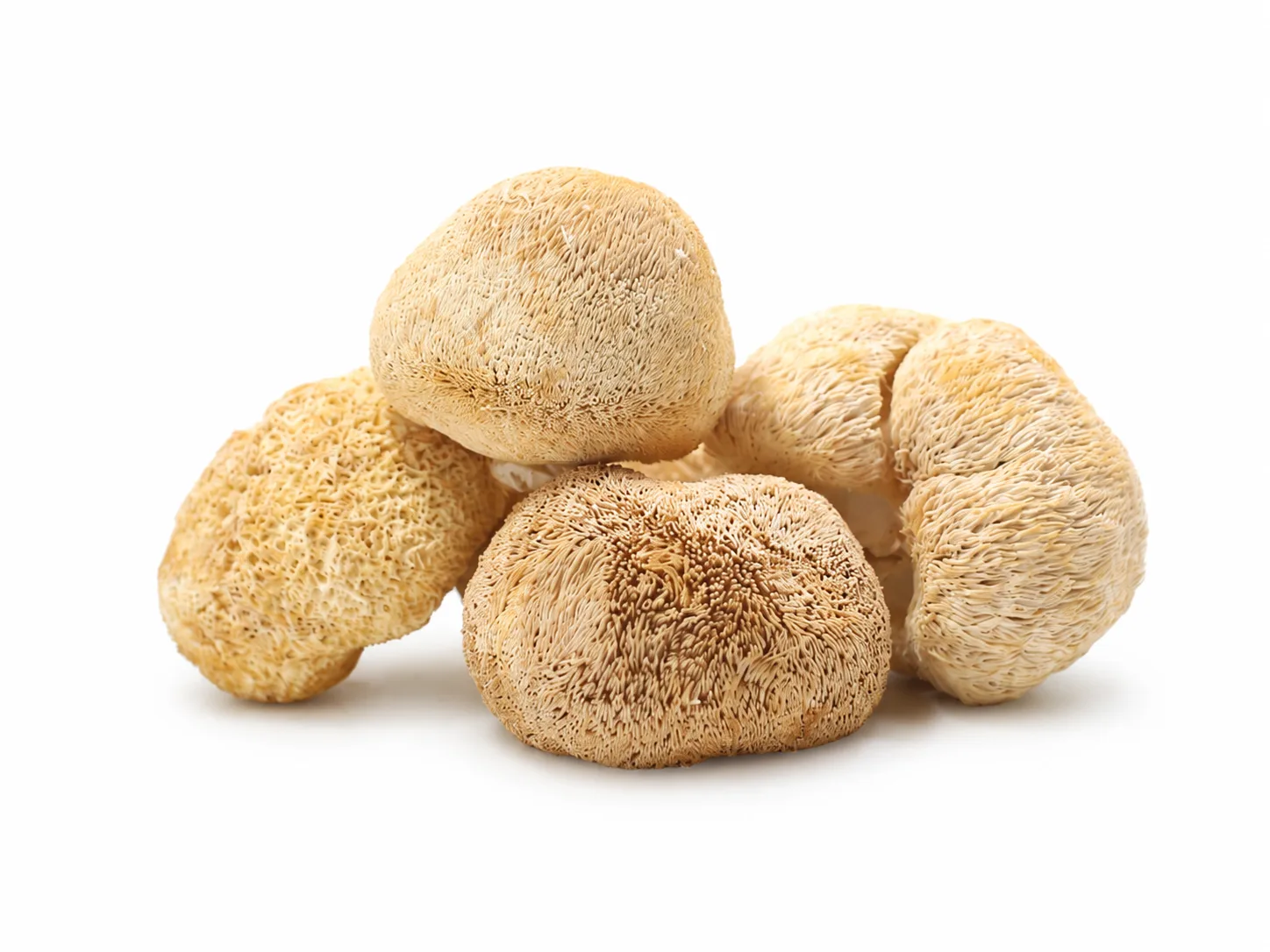
Hericium erinaceus
Lion’s Mane Ingredients with Powder, Extract, Dual Extract, and Freeze-Dried Options
Overview
The market often talks about Lion’s Mane as if every product naturally belongs to the same cognition story. In practice, that is too simple. Fruiting body powder, water-soluble fractions, lower-polarity fractions, freeze-dried materials, and mycelium-related materials do not belong to the same technical conversation just because they share the same species name.
For Biosan, Lion’s Mane should not be reduced to a generic nootropic slogan. Different product forms reflect different raw material choices, different process routes, and different compositional priorities. Weakly polar compounds such as hericenones and hericenes are associated more closely with alcohol-related fruiting body fractions, while erinacines belong to the mycelium discussion. Water-extracted Lion’s Mane, by contrast, has long been understood in China more through its relationship with the Spleen and Stomach than through modern brain-marketing language.
This page therefore brings together Biosan’s main Lion’s Mane formats, including fruiting body powder, extract, dual extract, and selected freeze-dried options. The goal is to help buyers understand that not all Lion’s Mane materials should be interpreted in the same way, and that process choice matters as much as species name.
Available Product Forms
Additional standardised formats and detailed technical versions are available on request.
Note: Full specifications, ratios, and SKU codes are not published online. Use Request Documents for TDS, SDS, and COA samples.
Raw Material Background
Lion’s Mane was once a rare wild mushroom associated with ageing hardwood ecosystems, but modern commercial supply depends on cultivation. China played a central role in the domestication and scale-up of Lion’s Mane cultivation, and product quality today still depends heavily on region, substrate, climate, harvest timing, and drying discipline.
For Biosan, the raw material story is not simply that Lion’s Mane is cultivated. It is that fruiting body quality must be built intentionally. The growers Biosan works with are asked to focus on fruiting body development rather than superficial appearance alone. Substrate choice, mountain climate, harvest maturity, and post-harvest handling all affect whether the raw material is suitable for a serious ingredient rather than only for culinary presentation.
Processing Pathways
Lion’s Mane can be offered as fruiting body powder, concentrated extract, dual extract, and selected freeze-dried formats. Fruiting body powder preserves a broader and more complete material profile, although without the concentration that extraction provides. Concentrated extract is used when buyers need a cleaner, more processed fraction. Dual extract is relevant when both water-soluble fractions and lower-polarity compounds matter in the final ingredient concept.
For certain Lion’s Mane materials, Biosan also uses freeze-drying as a deliberate technical choice, especially where gentler handling is preferred for heat-sensitive fruiting body components such as hericenones and hericenes. Different forms exist because the raw material is being directed toward different technical outcomes, not because one marketing story can cover everything.
Traditional Use
In traditional Chinese practice, Lion’s Mane is associated more with nourishment of the Spleen and Stomach than with the dramatic modern language often used in cognitive supplement marketing. It has traditionally been used as a food-medicine bridge, valued for digestive support, nourishment, and recovery in weakened constitutions.
Scientific / Research Context
Modern research on Lion’s Mane has focused on beta-glucans, hericenones, hericenes, erinacines, and broader questions of nerve growth, neuroprotection, inflammation, and cognitive support. That research interest is important, but product interpretation still depends strongly on whether the material is fruiting body powder, concentrated extract, dual extract, freeze-dried fruiting body material, or mycelium-related material. These are not interchangeable just because the species name is the same.
Quality & Documentation
Detailed specifications, TDS, SDS, and document support for Biosan’s Lion’s Mane formats are available on request. Biosan can also clarify the practical difference between powder, extract, dual extract, and selected freeze-dried forms for customers who need technical guidance.
FAQ
What Lion’s Mane forms does Biosan offer?
Biosan offers Lion’s Mane in fruiting body powder, concentrated extract, and dual extract formats, with selected freeze-dried and other standardised versions available on request.
Does this page include full active compound specifications?
No. The public page shows the overall product structure, while detailed technical data is handled through document requests.
Why is Lion’s Mane offered in more than one format?
Different formats reflect different process choices and different technical priorities. Powder, extract, dual extract, and freeze-dried material are not the same ingredient in different packaging.
Does Biosan focus on fruiting body Lion’s Mane?
Yes. The main public presentation is built around fruiting body-based ingredient formats.
Can Biosan explain the difference between extract and dual extract?
Yes. Relevant technical information can be provided through product discussions and document requests.
Related Resources
Need Specifications, Documents, or Product Guidance?
If you are evaluating mushroom ingredient options for your market, product line, or formulation work, our team can help you review available formats and provide the relevant technical documents on request.